
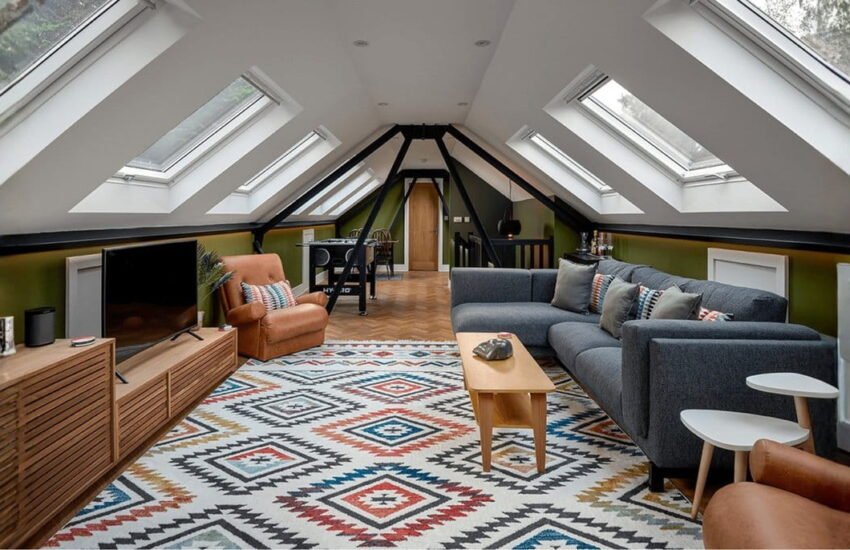
Loft Conversion: The Smartest Way to Add Space Without Moving
Quick Summary
| A loft conversion is a smart way to add space, increase comfort, and boost your home’s value without moving. It can be an extra bedroom, office, or bathroom, fully customised to your needs. We cover types of loft conversions, planning permission, building regulations, and design ideas, plus real costs, which typically range from £30,000 to £70,000 in the UK. |
What if the extra space you’ve been searching for is already in your home – just waiting to be transformed? Currently, a portion of your home is being occupied by nothing, gathering dust and quietly wasting its potential. That empty attic? That extra bedroom you’ve been begging for, a productive home office, or possibly even a breathtaking loft conversion bathroom that brings indulgence and exceptional value.
A loft conversion is more than just space; it’s adapting your home to how you want to live. But before you get started, there are important questions to consider. How much does a loft conversion cost in the UK?
What are the different types of loft conversions available? And do you require planning permission for a loft conversion, or does it fall under permitted development? And what about building regs, insulation and real costs for a loft conversion that no one ever talks about?
Get these right, and your “dream upgrade” can turn into a fortune pit. Get them right — and you might be able to cash in on one of the most valuable upgrades your home can see.
In this guide, we’ll take you through all the information you need to know, from loft conversion costs in the UK and design options to regulations and what they’re really worth, so you can make your way forward with clarity, confidence and no guesswork.
What is a Loft Conversion?
A loft conversion is a process where you convert your loft space into an additional living space. Instead of letting that space go to waste, you can turn it into something actually useful – like an extra bedroom, a home office, or even a swanky bathroom.
Look at it this way: you’re not creating more space in your home; you’re opening up space that exists. It’s one of the most cost-effective ways to grow your living space without expanding or changing the actual footprint of your home.
This is why loft conversions are so popular across the UK. With rising property prices and moving costs, more homeowners are choosing to upgrade rather than relocate. It’s not just a trend; it’s a practical response to modern living challenges.
What are the different types of Loft Conversions?
So every home in the UK is built differently, and they have the same conventional or modern footprint. When deciding to build a loft conversion in your home, there are lots of options you can consider. The right option depends on your roof structure, budget, and how much space you want to create.
Selecting the correct type from the beginning can save you money and avoid design restrictions at a later stage. It will also make sure that your loft meets not only what you need now but also what you may need in the future. Let’s have a look at its type.
Dormer Loft Conversion
This is also one of the most popular styles of loft conversions. It’s built vertically above the plane of your existing roof to provide you with more headroom and floor space. It’s a sensible option if you’re looking for something between space and cost.
Dormers also enable the use of large windows, allowing for more natural light and better ventilation. Due to its functionality, it is suitable for use as a bedroom, an office or even a small studio. It’s generally the first choice for homeowners starting their first loft project.
Read More About Dormer Loft Conversion Here
Hip to Gable Loft Conversion
Ideal for semi-detached or end-of-terraced properties, this design straightens a sloping roof to create a vertical wall. A sizeable and more functional room. It opens up the floor plan and allows for the design of a real living room rather than a cramped roof.
This kind of conversion is ideal if you feel your current loft feels restricted due to the roof angles. It transforms awkward spaces into something far more practical.
Velux Loft Conversion
This is a more common type of loft conversion; this is the simplest and most budget-friendly loft conversion option. It doesn’t change the structure much; it just adds windows to bring in natural light. This keeps building time down and costs down. It’s perfect if you have sufficient head height in your loft, as it doesn’t require double-storey space. While it won’t give you extra space, it dresses up what you have in a neat and sleek manner.
Mansard Loft Conversion
If you are looking for extra space, then this mansard-loft conversion is one for you. A mansard is formed by modifying the existing pitch of a roof to create a substantially vertical wall. It is more expensive but offers a premium finish.
You are building a whole new floor that seems like a manufactured extension of your home. This variety is especially common in cities, where making the most of internal space is a priority. They’re an investment in the future, in both comfort and value.
Read More About Mansard Loft Conversion Here
Mezzanine Loft Conversion
This is one of the modern designs in a loft conversion, which creates a partial floor within the loft, giving a stylish, open-plan feel. Best suited for homes with high ceilings, it adds a unique architectural element. It’s not just functional; it’s visually impressive. Perfect for creative spaces, studios, or modern bedrooms, it gives your home a contemporary edge that stands out.
Modular Loft Conversion
Built off-site and installed quickly, this is a faster and more controlled construction option. Because much of the work is done in a factory, the process is more predictable and less susceptible to weather-related delays. It’s perfect if you want to stay out of the way of your daily life. The speed and convenience have made it a favourite with busy homeowners.
L-Shaped Loft Conversion
A combination of two dormers, forming an L shape. This design is popular for larger homes and creates multiple rooms. It allows for more flexible layouts, including adding separate bedrooms and bathrooms. This makes it perfect for growing families. It’s one of the best options if you’re looking to significantly increase usable space rather than just adding a single room.
Piggyback Loft Conversion
A more recent innovation in which the loft is stacked above the already existing extension. Good option for space maximisation if you already have a rear extension. It goes up rather than out. This technique is perfect for city dwellers who live in small spaces. It is a clever way to ensure you get the most out of your land.
Advantages of Loft Conversion
- A loft conversion is more than just adding space; it upgrades the way you live
- It improves how you use your home, making it more efficient and comfortable
- It can provide privacy, productivity, or a peaceful living environment
- It is a strong long-term investment for your property
- A loft conversion adds immediate value to your home
- It also increases the long-term value of the property compared to many other home improvements.
Building Regulation For Loft Conversion
Even if your project falls under permitted development, you still need to follow the loft conversion building regs. These regulations ensure your space is safe, energy-efficient, and suitable for living.
They cover everything from structural strength to fire safety. Ignoring building regs for a loft conversion can lead to serious consequences later, especially if you plan to sell. Compliance is not just a requirement; it’s protection for your investment.
What are the alternative options according to your house?
Your property type plays a very important role in deciding which loft conversion type you can choose from. Your type of property dictates what’s possible. Every house style has its own set of constraints and possibilities. Knowing this from the start enables you to select the best design. It also ensures that your conversion blends naturally with your existing structure rather than feeling like an add-on.
Terraced House
Generally suitable for dormer or L-shaped conversions. Space can be at a premium, so clever design is essential. Light and layout become a necessity to maximise in such a small space. Make the best use of every inch. With the right design, a small loft can look airy and inviting.
Detached
You have the most flexibility here. Mansard, hip to gable, or large dormers all work well. You can experiment more with design and layout. This allows for larger, more luxurious spaces. Detached homes often achieve the highest value increase from loft conversions due to their scale.
Semi-detached
Hip-to-gable and dormer combinations are very popular, offering a great balance of space and cost. They provide enough flexibility without becoming overly expensive. It’s a practical middle-ground option. This makes them one of the most common property types for loft upgrades.
Different Ideas of Loft Conversion
There are many ideas that you can follow for designing your loft conversion, but it mainly depends on what is the purpose of building an extra space in the house. If you have the leverage, use whatever space you want to have. This is where a loft conversion really becomes exciting, because you’re not just adding a room; you’re creating something that fits your life perfectly.
The beauty of a loft conversion is its flexibility. Whether your priority is comfort, productivity, or extra income, the space can be designed around your exact needs. And with smart planning, even a compact loft can feel surprisingly spacious and functional.
Here are some practical and popular loft conversion ideas to inspire you:
1. Extra Bedroom (Most Popular Choice)
Turning your loft into a bedroom is the most common option, and for good reason. It’s ideal for growing families, guest accommodation, or even a master suite. Simply add built-in storage and adequate lighting, and it can be as cosy as any other room in your home. Combine this with a loft conversion bathroom, and you can turn it into a luxury ensuite space.
2. Home Office or Work Studio
With the trend and need for a home office and work studio, there must be an element. A loft also naturally sets you apart from the rest of the house, so it’s ideal for focus and productivity. Add skylights to bring in natural light, and you’ll have a workspace that feels good to use every day.
3. Guest Room
Another option you can have for your loft conversion is to convert the loft into a guest room. It gives guests their own private space, making their stay more comfortable. Adding a small bathroom or shower can make it feel like a mini hotel suite.
4. Rental Space or Airbnb
Looking to generate extra income? A loft conversion can become a self-contained rental unit. With the right layout and permissions, this can be a great long-term investment. It’s especially valuable in high-demand areas where extra living space is always needed.
5. Miscellaneous Room
You can have other options as well, like kids’ playrooms. Or you can make a home gym or another wellness space. Other creative studios (art, music, and content creation). Additionally, a chill-out lounge or entertainment room can be too.
Thinking about converting your loft
A loft conversion is one of the smartest ways to expand your home without the disruption of moving. With the right design and planning, you can have your dream project and significantly boost your property’s value. Ready to turn your loft into a functional, beautifully designed space?
Get expert guidance, accurate cost estimates, and a clear step-by-step plan. Bring your loft conversion project to life with Plansing. Speak to our experts today!
FAQs
- Do I need both an architect and a structural engineer for my project?
For the most part, yes. An architect determines the design and flow of the house; the structural engineer ensures its stability and security. To have them both from the start gives you better coordination and fewer headaches down the road.
- What is the difference between architectural design and structural engineering?
The architectural design relates to shape, function, and building code compliance. Structural engineering involves the study of load paths, materials, foundations, and safety. The outcomes of both are required for the execution of a project.
- Can one company provide both architectural and structural engineering services?
Yes, absolutely. Plansing offers fully integrated architectural and structural engineering services; our team ensures that drawings and calculations are aligned and approved more efficiently.
- When do structural calculations become necessary in a design project?
When making changes to load-bearing walls or installing RSJ beams, or for foundation alterations or property extensions, structural calculations must be submitted to building control for approval.
- Why is it beneficial to combine architectural design and structural engineering from the beginning?
Early integration reduces redesigns, improves structural efficiency, speeds up approvals, and lowers construction risk, saving time and money.
