

Dormer Loft Conversion: Complete Guide & Planning Rules (UK)
Quick Summary
| A dormer loft conversion extends your roof to create more space, light, and usable headroom. It’s ideal for adding a bedroom, office, or en-suite without moving home. This type of loft conversion dormer is popular due to its cost-effectiveness and practicality. The average cost of a dormer loft conversion per square metre falls between £1,200 and £2,500. |
If you live in the UK, you are likely looking for more space. Having more space in the home is better than the hassle of moving and finding a new place. A dormer loft conversion can save you from this headache, as it is one of the most effective options to add more space and value to your home.
A dormer loft conversion is one of the most effective ways to unlock hidden space in your home without extending your property’s footprint. By extending vertically from your existing roof, it transforms an underused attic into a bright, spacious, and fully functional room.
Whether you’re planning a new bedroom, home office, or even a luxury en suite, a dormer conversion can completely change how your home feels and functions.
In this guide, we’ll break down everything you need to know about dormer loft conversions, from types and design ideas to costs, planning rules, and structural considerations.
What is a Dormer Loft Conversion?
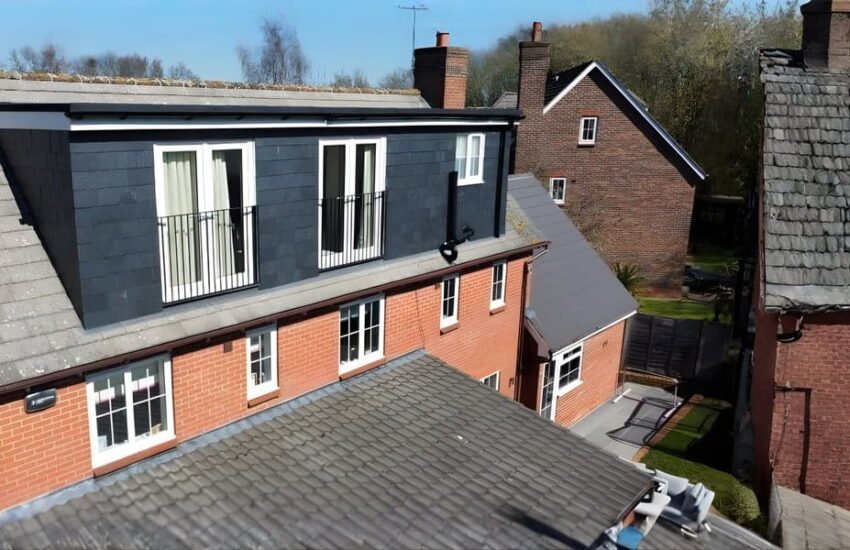
A dormer loft conversion is a structural extension that projects vertically from a sloping roof to create more internal space and headroom. Unlike rooflight-only conversions, a dormer on a house adds a box-shaped structure that increases usable floor area significantly.
In simple terms, a dormer turns a tight attic into a practical living space such as a bedroom, office or bathroom. This is why dormer attic conversion projects are so common in UK homes.
Types of Dormer Loft Conversion
There are several styles of dormers, each suited to different property types and design goals:
Flat Roof Dormer
The most common type in the UK, the flat roof dormer, maximises internal space and is usually the most cost-effective option. It creates a large, box-shaped extension that works especially well for bedrooms and bathrooms.
Shed Dormer
A shed dormer uses a single sloping roof rather than a flat top. It blends more naturally with certain rooflines and can feel less “boxy” from the outside while still adding valuable space inside.
Gable Dormer
The gable dormer features a pitched roof with a triangular front. It’s often used in period homes where aesthetics matter as much as functionality, giving a more traditional architectural look.
L-Shaped Dormer
Common in Victorian and Edwardian homes, the L-shaped dormer extends across two sections of the roof. It creates a large, open-plan space, ideal for spacious master suites or multiple rooms.
Advantages of Loft Conversion Dormer
A dormer loft conversion comes with several benefits:
- Adds significant headroom and usable floor space
- Increase property value
- Can create an extra bedroom or bathroom
- Often falls under permitted development
- More natural light with loft conversion dormer windows
- Cost-effective compared to full extensions
Design ideas for Dormer Loft Conversion
An inside dormer loft conversion can be designed in many creative ways, depending on your needs. A popular choice is a master bedroom with an en-suite bathroom, turning the loft into a private retreat. Others prefer a home office, especially with remote work becoming more common.
You can also design a guest suite, a children’s bedroom, or even a creative studio. With smart planning, built-in storage, and well-placed dormer loft conversion windows, even smaller lofts can feel open and luxurious. The key is to design around the roof shape rather than against it.
What are the structural considerations for a dormer loft?
Before starting a dormer loft conversion, structural planning is essential. The existing roof needs to be strong enough to support the extension, and in some cases, steel beams are added for reinforcement. Head height is also critical; there must be sufficient vertical space for comfortable use, and the flooring and insulation must be installed at the correct height.
Access is another major factor. The staircase’s position affects both the layout and the usability of the new space. Fire safety, ventilation, and insulation must also meet UK building regulations. These are not just technical details; they directly impact the safety and comfort of your new space.
Is your home suitable for a dormer?
Most homes in the UK can support a dormer loft conversion, but stability depends on a few key factors. Roof height is one of the most important considerations. If there isn’t enough headroom, a dormer may not be viable. The roof structure also matters; traditional rafters are generally easier to work with than modern trussed roofs, although both can often be adapted.
Terraced, semi-detached homes are all commonly converted, especially in urban areas where space is limited and extensions are restricted. A professional survey is usually needed to confirm whether your loft is suitable.
What is the average cost of a dormer loft conversion?
Cost is one of the biggest deciding factors when planning a loft conversion. In the UK, a dormer loft conversion costs typically range from £30,000 to £80,000, depending on size and specification. Smaller, basic conversions sit at the lower end, while larger, high-spec designs with bathrooms and premium finishes cost more.
On a per-square-metre basis, the dormer loft conversion cost (m²) is usually between £1,200 and £2,500.
Several factors affect the final price:
- Roof of the structure’s complexity
- Size of the dormer
- Quality of finishes
- Installation of plumbing or bathrooms
- Staircase design and placement
If you’re asking how much a dormer costs in the UK, the truth is it varies widely, but it remains one of the most cost-effective ways to add a full room to your home. Even smaller elements like dormer windows cost the UK £1,000 to £3,000, depending on size and design.
Is a Dormer Loft Conversion Worth It?
A dormer loft conversion is often considered one of the most worthwhile home improvements in the UK, and for good reason. Instead of going through the stress and cost of moving, you can unlock valuable space within your existing property. Whether it’s an extra bedroom, home office, or a private suite, the added functionality alone makes a significant difference to everyday living.
From a financial perspective, a well-executed dormer conversion can increase your property’s value considerably, often exceeding the initial investment. When compared to ground-floor extensions, dormers are usually more cost-effective while delivering similar benefits in terms of usable space. For homeowners looking for lifestyle improvement and long-term return, a dormer loft conversion is a smart, strategic choice.
Step-by-Step Process of a Dormer Loft Conversion
A dormer loft conversion follows a structured process to ensure everything is safe, compliant, and well-executed. It usually begins with an initial survey to assess the suitability of your loft and identify any structural requirements.
Next comes the design phase, where layouts, drawings, and specifications are prepared. If required, planning permission is obtained, followed by building regulations approval. Once everything is in place, construction begins; this includes reinforcing the structure, building the dormer, installing windows, and completing roofing work.
The final stage involves internal work such as insulation, electrics, plumbing (if needed), plastering, and finishing. Each step is carefully managed to ensure the final result is both functional and high-quality.
Ready to Transform Your Loft with Plansing
A dormer loft conversion isn’t just about adding space; it’s about completely rethinking how your home works for you. With the right design, your loft can become one of the most valuable and enjoyable parts of your property.
At Plansing, we specialise in delivering fully designed, structurally sound, and beautifully executed loft conversions. From initial concept to planning and technical drawings, we help turn unused space into something truly functional and inspiring. Contact us to design your dream dormer loft conversion.
FAQs
- How much space can a dormer add?
A dormer can significantly increase usable floor area, often enough to create a full bedroom and bathroom, depending on the roof size.
- Can I convert my loft into a room without planning permission?
Yes, many dormer loft conversions fall under permitted development, but they still need to comply with building regulations.
- What factors affect dormer loft conversion cost per m²?
The main factors include roof structure, materials, and design complexity; internal layout; and whether plumbing or electrical work is required.
- How do you build a dormer loft conversion?
It involves design, structural assessment, approvals, roof alterations, dormer construction, insulation, and full interior finishing. Due to complexity, it should always be handled by professionals.
&media=https://plansing.co.uk/wp-content/uploads/2026/05/Dormer-Loft-Conversion.jpg)